
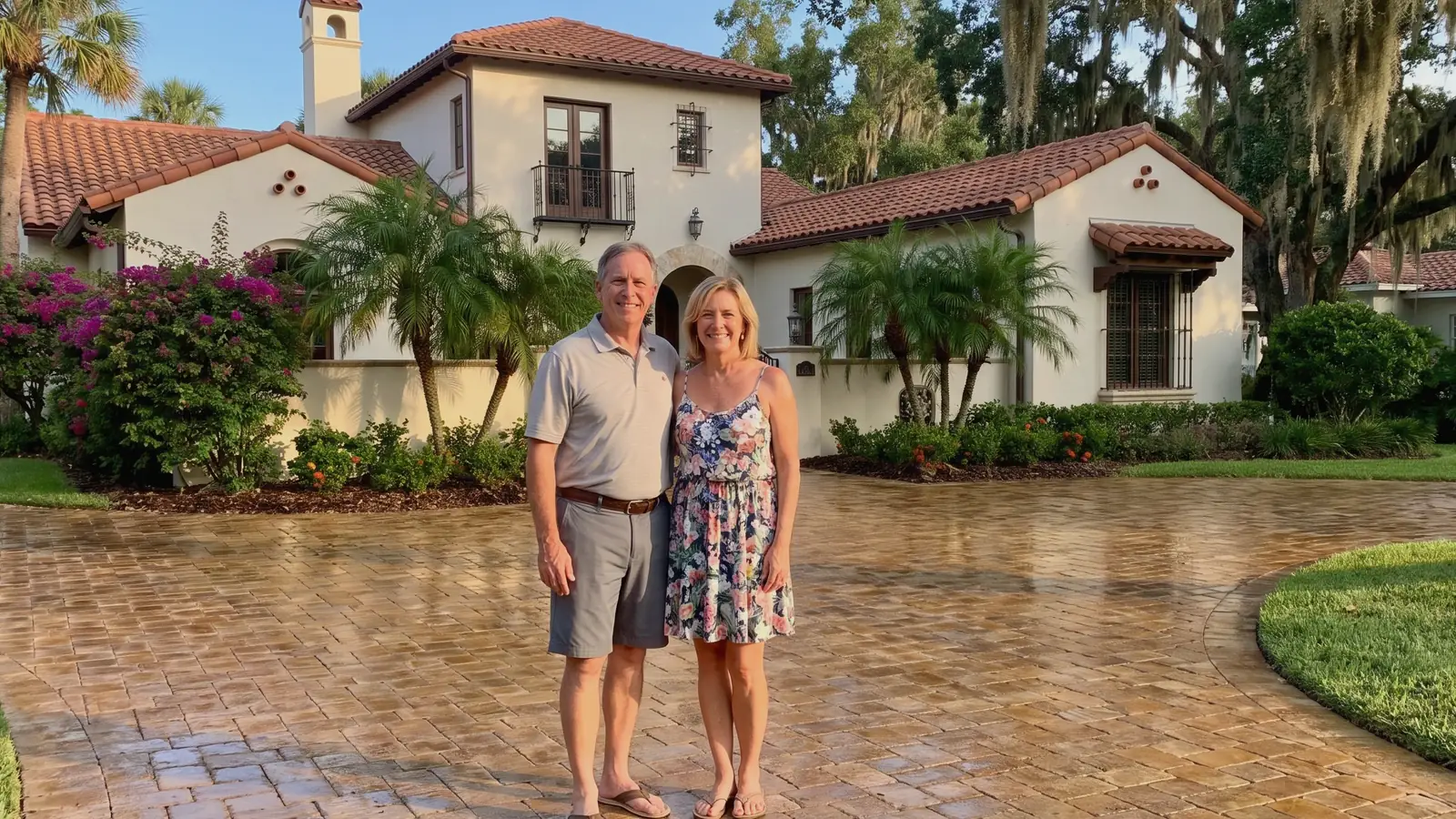
Paver sealing for Cape Coral homes
Paver Sealing in Cape Coral, FL
Canal lot or inland street, Cape Coral pavers can get a free sealing estimate when you call (941) 207-3213.
- Brings out deeper paver color
- Fresh joint sand helps lock pavers in place
- Gives weeds less room to grow
- Makes the surface easier to keep clean
- Free estimate, no obligation
Request a Free Estimate
Free, no obligation.
Fast, careful paver sealing in Cape Coral
Paver sealing in Cape Coral comes with a free estimate and a quick reply from a local contractor. Driveways, pool decks, lanais and walkways on canal lots and inland streets are all fair jobs. Plan on a reply within 1 business day, often much sooner, after you ask for a free estimate.
A wet season of 56 inches of rain a year and 355 days of sun is hard on a paver surface. Picture a driveway with green joints and washed-out sand next to a pool deck that has faded to a flat tan. A wash, fresh sand and sealer bring both back to one even color. Call (941) 207-3213, name your street and describe your pavers.
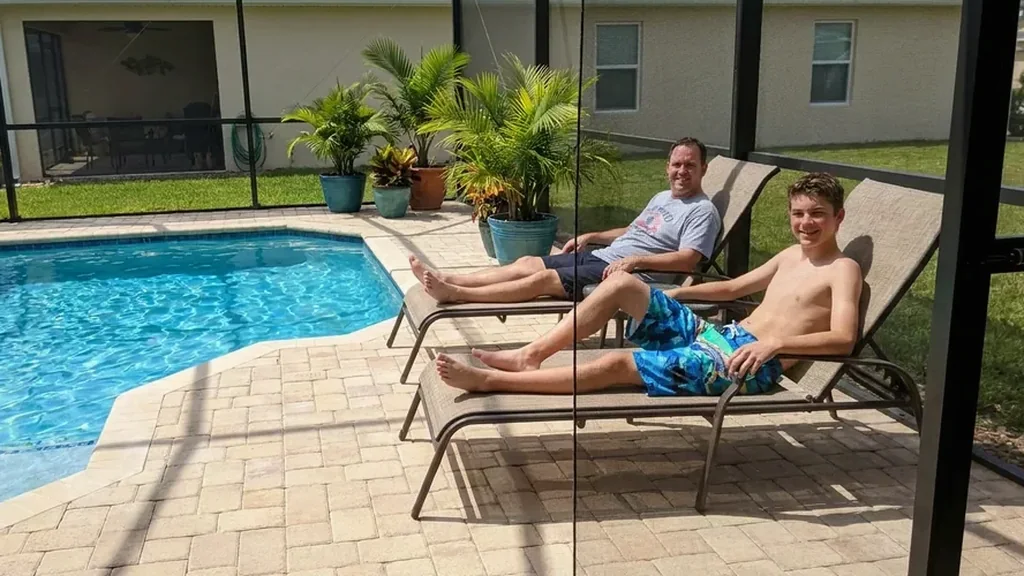
Why hire a local paver sealing contractor in Cape Coral?
Cape Coral is a canal city with its own irrigation system, wide lots and a long wet season. A local paver contractor plans for all of it, so to talk through your property, ask for a free estimate.
Free, no obligation
A contractor visits your Cape Coral home, looks over the pavers and gives you a price. Whether to go ahead is your decision.
A range you can check
Quotes in Southwest Florida commonly land between $1.50 and $3.00 per square foot to clean, sand and seal.
Built for sun and storms
Sun fades pavers and wet-season rain empties joints. The plan covers washing, sand and sealing with both in mind.
Pool deck or canal lot
Pool decks and waterside lots stay damp. Choose matte or wet look, and the contractor explains how each wears.
Get Your Free Estimate in Cape Coral
Tell us about your pavers in Cape Coral.
Free, no obligation
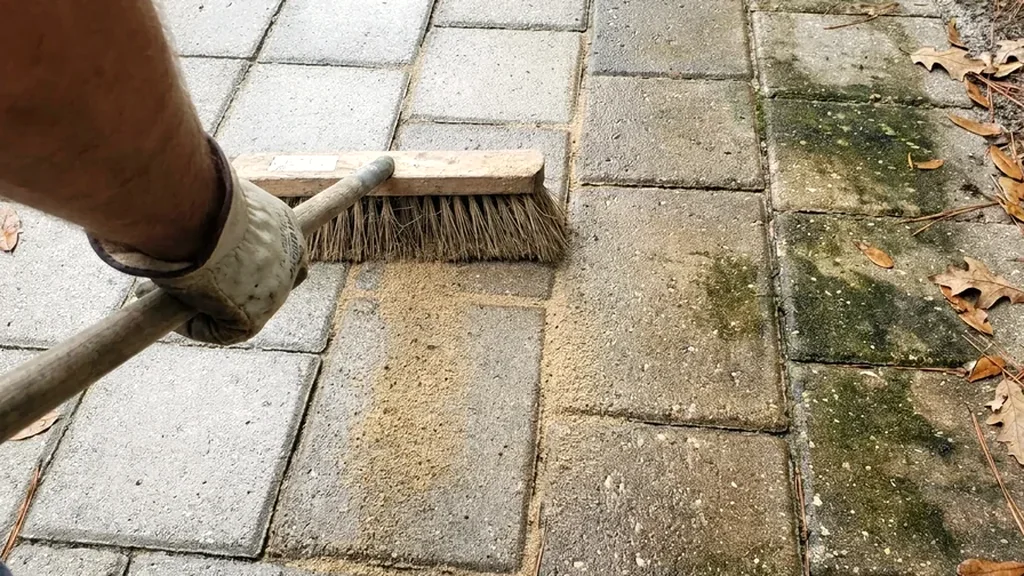
What paver problems show up most in Cape Coral?
Sun fade across open driveways
Cape Coral gets about 355 days of sunshine a year, according to Wikipedia. A Lakewood Ranch paver company says strong sun fades unsealed pavers to a flat, chalky version of the original. Wide driveways and pool decks catch it all day. Sealer holds the color, so a fresh coat keeps a driveway looking even between washes. A faded pool deck also feels hotter and looks older than the house around it. Ask the contractor to show you a clean paver beside a faded one to see the difference. Fade is slow, so many owners do not notice until a fresh patch shows the difference.
Joint sand lost in the wet season
The city receives about 56 inches of rain a year, mostly from June to September, in brief and heavy downpours. Rain that heavy pulls sand out of the joints and leaves them open. Lee County soil is a fine sand that holds almost no water, so joints drain fast and open up. Every job refills the joints, since washing removes more sand. Joints beside downspouts empty first, which tells the contractor how much sand to bring.
Damp and green beside canals
With over 400 miles of canals, many Cape Coral lots sit close to water. Humid air, shade from trees and a high water table keep pavers damp. The county's groundwater sits within two feet of the surface across much of it. Algae and mildew grow in those conditions, and a wash comes before any sealer. Pool decks catch splash on top of that, so they stay wet longer than driveways. Pointing out damp corners at the estimate helps the contractor plan extra drying time. The city's freshwater canal system alone covers 300 miles with 25 weirs and stores water for the dry season, so water is never far away.
Salt air and harsh sun on sealer
A Sarasota County paver company says Florida's UV, humidity and salt air are harder on sealer than in most states. Typical driveway coats hold two to three years and covered patios three to four. Open driveways and lots near the river or Matlacha Pass may need attention sooner. A water test shows when the coat is spent. Each sealer holds at a different pace, so the contractor will ask which product is down.
Spray marks from irrigation
Cape Coral runs an irrigation system fed by treated wastewater and canal water, and sprinklers often reach driveway edges. Orange streaks on a driveway usually mean iron in the water, according to University of Florida guidance. Any stain is cleaned before sealing, since sealer would lock it in. Aiming sprinklers off the pavers helps. Marks that trace a line back to a sprinkler head point to the source. Redirecting the spray helps keep the stain from returning after sealing.
Do canal lots and inland streets in Cape Coral need different sealing?
Often yes, because moisture and exposure differ. A canal lot with a pool deck stays damp from humid air and water close by, while an inland driveway on an open lot gets more raw sun. The right cleaning plan and sealer timing can differ as a result. Say which kind of lot you have when you ask for a free estimate.
Cape Coral began in 1958, and the first four homes went up on Riverside and Flamingo Drives. Development spread from Redfish Point, south of Cape Coral Parkway, through the early 1960s. Pavers on older streets may have been sealed before, which affects the product choice. If you do not know what is on yours, call (941) 207-3213.
The city covers 120 square miles between the Caloosahatchee River and Matlacha Pass. Wide lots mean larger driveways and bigger pool decks than a tight neighborhood might have. Some lots sit near preserves and mangroves, where shade and damp are the norm, and that changes how often a wash is needed. To describe your lot, ask for a free estimate.
Cape Coral grew from 154,309 people in 2010 to 194,016 in 2020, a 26 percent jump. That pace means many pavers are only a few years old, while others date to earlier building booms. A first coat and a restoration are different jobs, so tell the contractor which you think you need when you ask for a free estimate.
The city's freshwater canal system covers 300 miles with 25 weirs and storage for the rainy season, and it also manages excess stormwater for flood control. Lee County's most common soil is Immokalee, a fine sand that holds almost no water, and about 75 percent of the county stays wet for long stretches. Because the ground stays wet, call (941) 207-3213 and ask how drying time is judged.
What does paver sealing cost in Cape Coral?
Cape Coral lots are big, so a wide driveway, pool deck and lanai can add up fast. Prices published by Southwest Florida companies commonly run $1.50 to $3.00 per square foot for cleaning, sanding and sealing. Total area drives the figure, and bundling the pool deck into one visit usually saves money. To price your layout, ask for a free estimate.
Old sealer, heavy algae and sunken pavers push a quote higher, while a clean and flat driveway sits lower. Canal lots with tight side access can add hauling time, and a long driveway adds walking time. Call (941) 207-3213 and describe your property, and the contractor can tell you which of these apply.
| Paved area | Typical example | Clean, sand and seal |
|---|---|---|
| 300 sq ft | Small patio or walkway | $450 to $900 |
| 600 sq ft | Two car driveway | $900 to $1,800 |
| 1,000 sq ft | Large driveway or pool deck | $1,500 to $3,000 |
| 1,500 sq ft | Driveway plus pool deck | $2,250 to $4,500 |
Math based on the $1.50 to $3.00 per square foot that Southwest Florida paver companies publish. Your contractor sets the actual price after seeing the surface. Repairs, leveling and stripping failed sealer are usually extra.
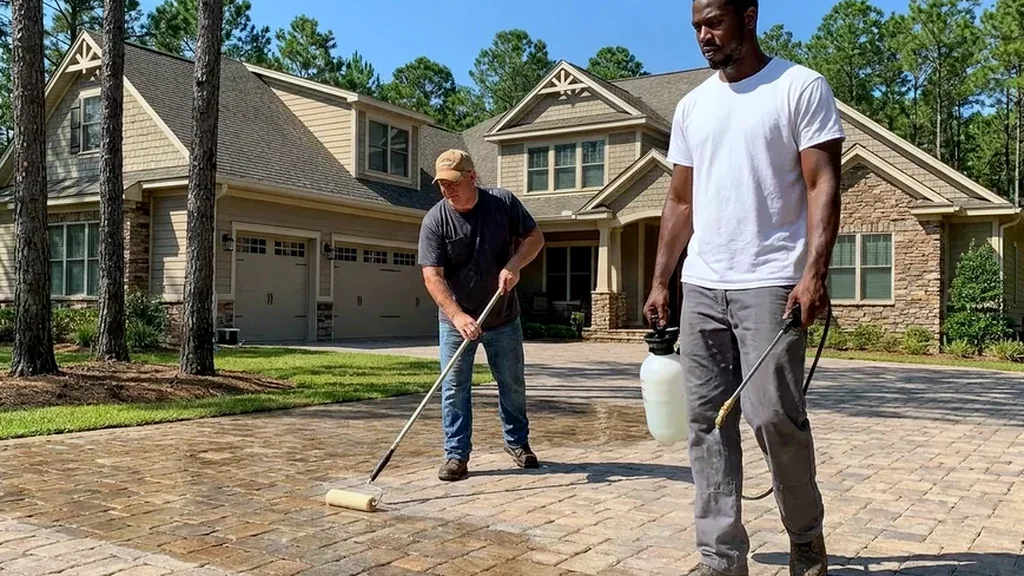
How does a paver sealing job work in Cape Coral?
Look the property over
The contractor walks your Cape Coral driveway, pool deck and lanai and checks for fade, algae, rust and settled pavers. Old sealer gets identified, because a water-based product cannot be laid over a solvent-based one. Sunken spots are marked for leveling. A written scope and price come before any work starts.
Wash and treat growth
Dirt, algae, mildew and rust come off. Pool decks and shaded corners get a second pass, since shade keeps growth coming back. Runoff is steered away from landscaping and stucco.
Rebuild the joints
Every wash empties the joints, so new sand is worked in ahead of the sealer. In Lee County's fine sandy soil, open joints let pavers move and weeds start. Pool surrounds take more sand than driveways, because splash and bare feet loosen the joints.
Let the surface dry
Sealer needs a dry surface. Humid coastal air slows drying, and a pool deck can stay damp from splash. A careful contractor waits for a dry window, and if rain is in the forecast the job moves.
Apply the sealer
Sealer goes on in coats. Walking waits about a day and cars two to three days, according to a Sarasota County company. The product, heat and humidity set the final timing for your job.
Complete paver services in Cape Coral
Every Cape Coral job opens with a wash. Algae, mildew, rust and dirt lift off, and pool decks and shaded lanais get extra time because damp air feeds growth there. The contractor also looks over the joints, the levels and any old sealer. To schedule a first look at no charge, ask for a free estimate.
After the wash, sand goes back into the joints, because wet-season rain empties them as well. Driveways, pool decks, lanai floors and walkways are usually finished together so the color matches. Sunken pavers are flagged for leveling first. Call (941) 207-3213 to ask about brick or travertine.
Sealer choice is about the look and the old coat. Wet look deepens color but shows scuffs sooner, and matte stays quiet. If a solvent-based coat is already down, water-based sealer is ruled out, so share what you know. To compare finishes, ask for a free estimate.
The wet season sets the calendar. Sealer needs a dry surface and a dry window after, and a Lakewood Ranch company says October through May is the better stretch. Cape Coral's dry season runs November to April, though a stray storm can still move a day. Call (941) 207-3213 to book a date.
Questions to ask before you hire
- Will the written estimate name the sealer brand and the price per square foot?
- What do you do about cracked or sunken pavers you find while washing?
- Do you check for afternoon thunderstorms before you start the sealing step?
- How many coats go down, and how long between them?
- Do you test a hidden corner first so I can see the finish before the whole driveway?
- Will you cover my lanai furniture, plants and landscape lights before spraying?
- Is the sealer water based or solvent based, and why that one for my pavers?
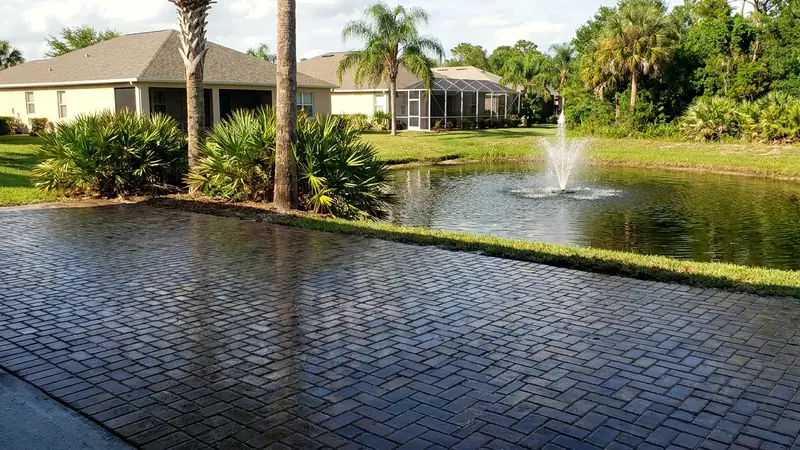
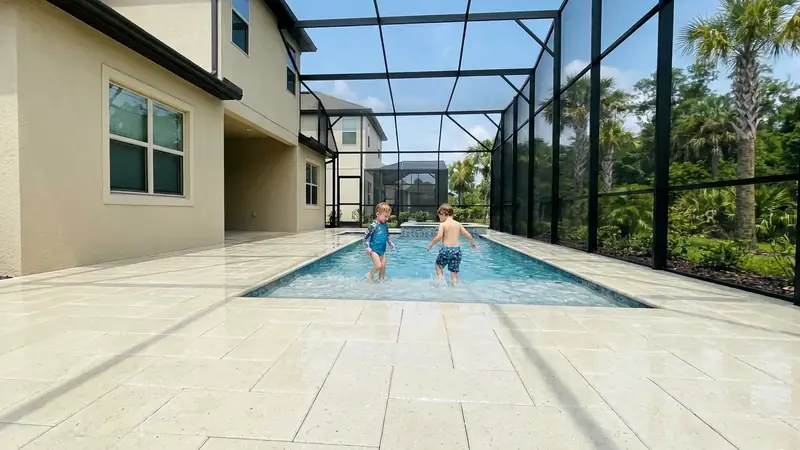
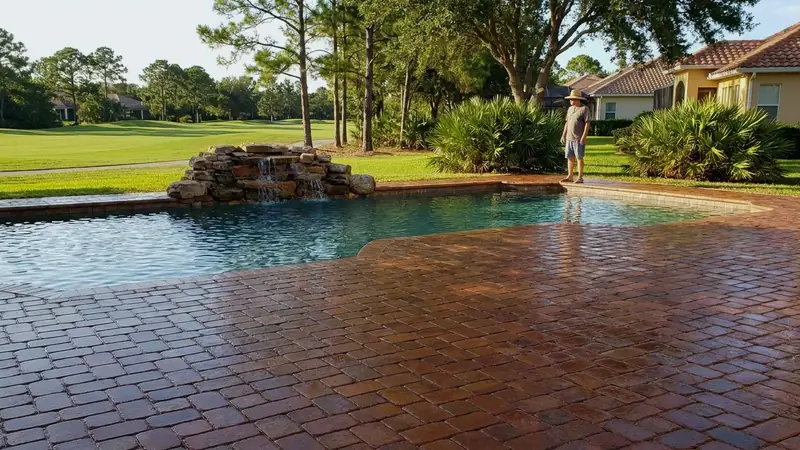
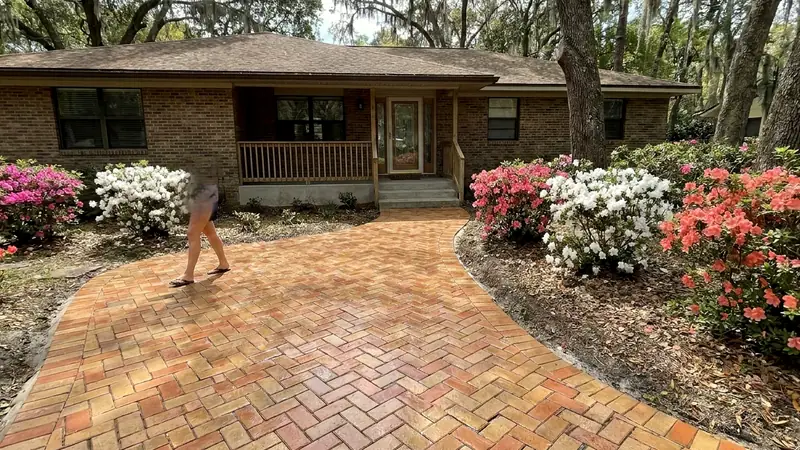
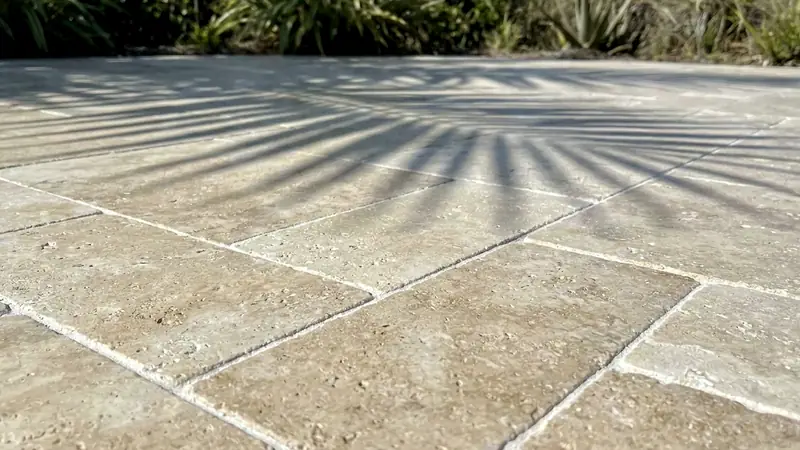
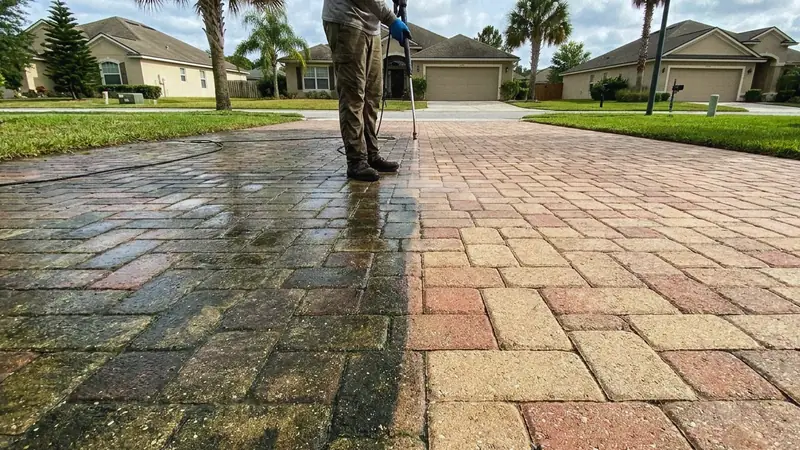
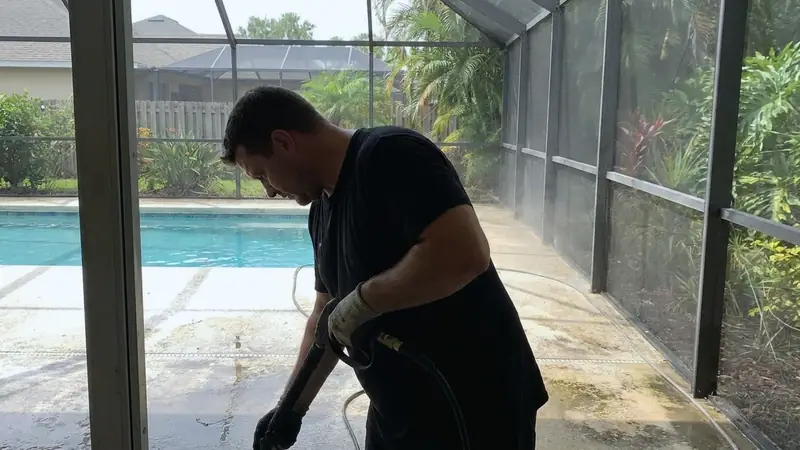
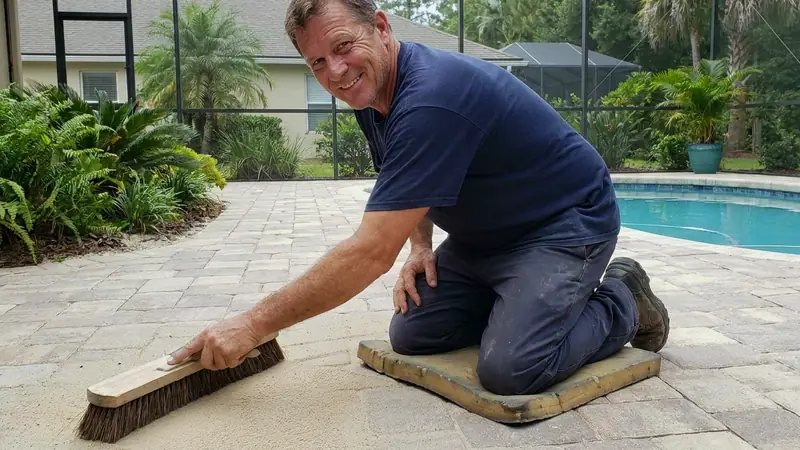
What do sealed pavers look like around Cape Coral?
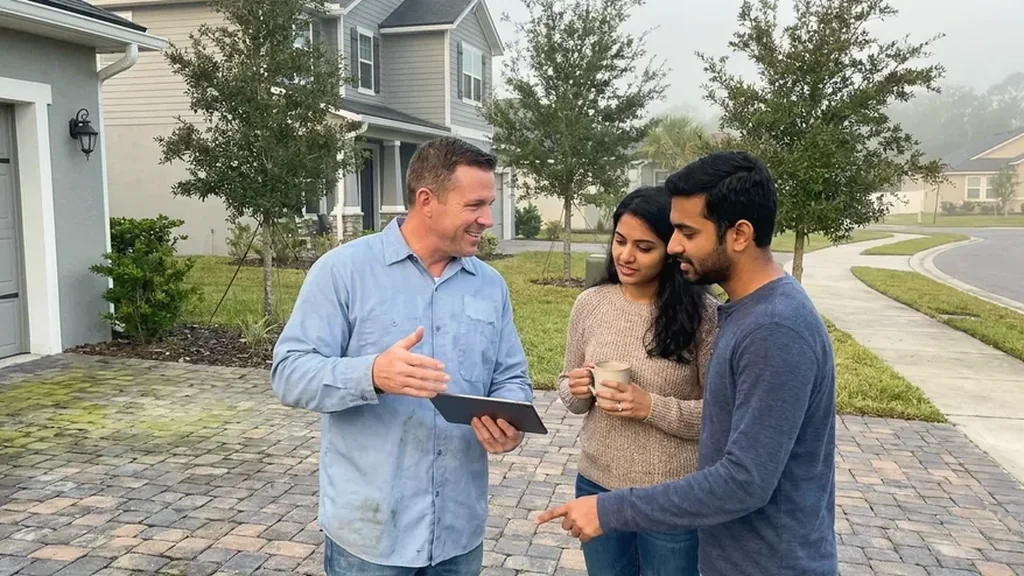
Why local matters in Cape Coral
Cape Coral spreads across 120 square miles, and canals, wide lots and a city irrigation system set it apart from other places. A contractor who works here knows which of those affect your pavers and which do not. That means a quote that fits your property, not a generic one. To ask about your street, ask for a free estimate.
The weather matters just as much. A long wet season and strong sun wear pavers in two directions. A local contractor plans the work for the dry months and knows to check pool decks and shaded corners, which stay damp longest. If your pavers look green or faded, call (941) 207-3213 and describe them.
You stay in charge of the finish and the date, and nothing is decided on the first call. The estimate is free, you owe nothing afterward, and an answer comes within 1 business day. Mention any damp corners or old sealer you know about. When you are ready, ask for a free estimate and give your street name.
How did Cape Coral grow, and what does it mean for my pavers?
Brothers Leonard and Jack Rosen bought a 103-square-mile tract in 1957 for $678,000, and the city grew from a planned community. Canals were dug, streets paved and homes built, and the Cape Coral Bridge opened in 1964. The city incorporated in 1970. That planning is why so many homes have wide lots and pool decks, so call (941) 207-3213 if yours does.
The city includes Rotary Park, Sirenia Vista Park, Lake Kennedy and the mangrove trail at Four Mile Cove Ecological Preserve. It also has burrowing owls and a public yacht basin with a beach on the Caloosahatchee River. Shade and water near those places keep nearby pavers damp. If your home is near one, ask for a free estimate.
Before the Cape Coral Bridge opened, reaching Fort Myers meant a drive of more than 20 miles by way of Del Prado Boulevard and the Edison Bridge. The first four homes went up in May 1958 on Riverside and Flamingo Drives. If your home is on one of those early streets, call (941) 207-3213 and ask what to expect from older pavers.
The 3,400-foot Cape Coral Bridge across the Caloosahatchee River opened in early 1964, and the city incorporated on August 18, 1970. Its irrigation comes from treated wastewater from two reclamation plants, supplemented by water pumped from its freshwater canals, a program that started in the late 1980s. Ask the contractor to note where sprinkler spray lands on your pavers when you call (941) 207-3213.
Frequently Asked Questions
How much does it cost to seal pavers in Florida, including Cape Coral?
Quotes in Southwest Florida commonly fall from $1.50 to $3.00 per square foot for the full clean, sand and seal. Cape Coral lots are large, so total area moves the price most. The estimate turns that range into a figure for your property. Removing old sealer costs extra, so ask for the area in the quote.
What do you seal concrete pavers with?
Both water-based and solvent-based products are common, and whatever is already on the pavers limits the choice. Mixing the two types in layers fails, with water-based on top of solvent-based. Write down the product name from the invoice for the next round. Matte keeps a natural look and wet look deepens color. Driveways often get more than one coat.
How long does water-based paver sealer last?
Most advice lands at two to five years between recoats. One Sarasota County company says driveways hold two to three years and covered patios three to four. Sun and salt air can shorten that, so use the water test to check. Pour water on a few sunny and shaded spots, and if it beads, the coat is still working. A shaded pool deck and a sunny driveway age at different speeds.
How often do pavers in Cape Coral need resealing?
Expect two to five years between coats. A Cape Coral driveway in full sun may fall at the short end. If water soaks in and darkens the paver, the sealer is spent and it is time to book. A shaded lanai may keep its coat longer than an open driveway.
Does salt air affect pavers in Cape Coral?
It can. A Sarasota County paver company says Florida's UV, humidity and salt air are harder on sealer than in most states. Lots near the river and Matlacha Pass may need attention sooner than inland ones. A water test shows when the coat is spent.
When should pavers in Cape Coral be sealed?
October through May is the drier stretch, according to a Lakewood Ranch paver company. Cape Coral's dry season runs November to April. Sealer needs a dry surface and a dry window after, so book early. Afternoon storms from June through September can move a job. An early fall booking gives you the pick of days.
Do canal lots need a different sealer from inland lots in Cape Coral?
The sealer types are the same, but conditions differ. Canal lots stay damp from humid air and water, and a Sarasota County paver company says salt air and sun are hard on sealer. Inland driveways take more raw sun. Tell the contractor your lot type so the finish and timing fit.
Does Cape Coral irrigation stain pavers?
It can if iron is in the water. University of Florida experts note that iron, common in Florida well water, leaves orange streaks. The city's irrigation mixes treated wastewater with canal water. Sealing waits until the mark is gone. Aiming sprinklers off the pavers helps keep it from coming back.
Do Cape Coral pavers need to be leveled before sealing?
Only where pavers have sunk. A coat on top cannot raise a sunken paver, so the dip would stay. Settled areas usually show up during the first walk-through.
How soon can I use my driveway after sealing in Cape Coral?
A Sarasota County company sets the wait at a day for walking and two to three days for cars. Heat and humidity shift that a little. The product and the weather set the exact timing.
Is it worth sealing a Cape Coral pool deck?
Often yes, because pool decks stay damp from splash and humid air. A Lakewood Ranch company says mildew, algae and dirt sit on top of sealer instead of soaking in, so a sealed deck washes more easily. Matte hides water spots better than wet look.
Does Cape Coral's wet season stop paver sealing?
It limits the dates. The city gets about 56 inches of rain a year, mostly from June to September, and sealer needs dry pavers. The dry season from November to April gives the widest window, so plan the job for those months.
Ready for a Free Estimate in Cape Coral?
Call (941) 207-3213 and tell us about your pavers.
Free, no obligation